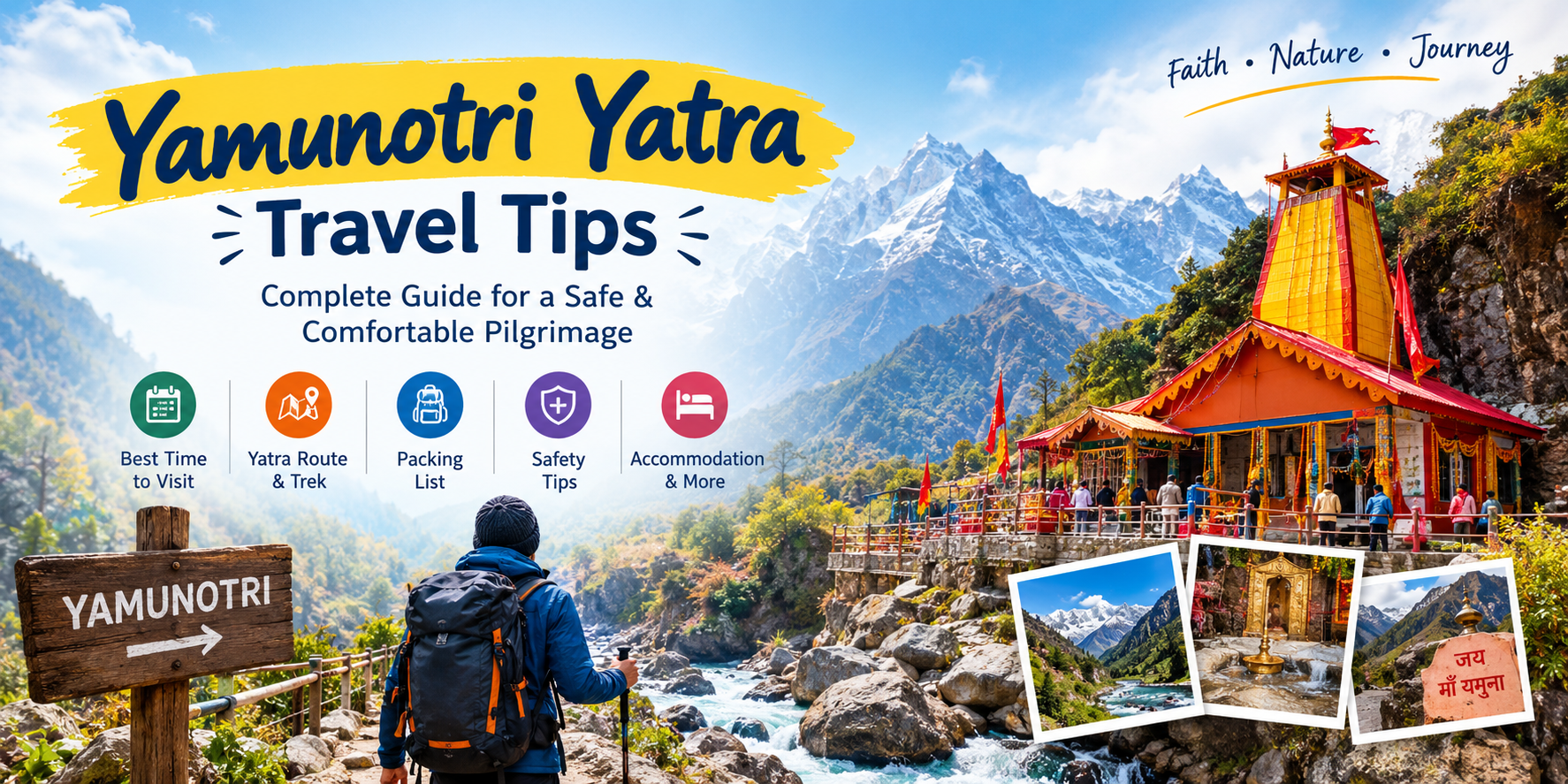
The Himalayas have a special way of making a spiritual journey feel more meaningful. Among Uttarakhand's sacred Char Dham destinations, Yamunotri holds a unique place as the shrine dedicated to Goddess Yamuna. Surrounded by dramatic Himalayan landscapes, waterfalls, mountain trails and natural hot springs, the journey to Yamunotri is both a pilgrimage and an unforgettable mountain experience.
But a successful pilgrimage requires more than devotion. The high-altitude terrain, changing weather, steep walking route and limited facilities mean that proper planning is important.
If you are visiting for the first time, these Yamunotri Yatra Travel Tips will help you prepare for the journey—from deciding when to travel and what to pack to understanding the trek, transportation, accommodation and safety precautions.
Yamunotri is traditionally the first destination in the Uttarakhand Char Dham circuit, followed by Gangotri, Kedarnath and Badrinath. The shrine is situated at a high altitude in the Garhwal Himalayas, so travelers should treat the journey as a mountain pilgrimage rather than an ordinary sightseeing trip.
1.Know the Yamunotri Yatra Before You Start
One of the most important Yamunotri Yatra Travel Tips is to understand the route before leaving home.
The road journey takes pilgrims toward Janki Chatti, which is the principal road-access point for the final journey to Yamunotri. From there, pilgrims continue on foot or use locally available options such as ponies or palanquins.
Official tourism information describes the final route from Janki Chatti as roughly 5–6 km, although exact route descriptions and measurements can vary depending on the source and route conditions.
This means you should not plan your day as if you are simply driving directly to the temple. The final stretch requires physical effort and time.
Tip: Start the trek early, keep your pace comfortable and allow enough time for both darshan and the return journey.
2.Choose the Right Time for Yamunotri Yatra
Weather can make a significant difference to your pilgrimage experience.
The Yamunotri region experiences harsh winters, and the high-altitude shrine remains inaccessible for part of the year. The pilgrimage season generally falls during the warmer months, with the exact opening and closing dates changing annually according to the religious calendar and official announcements.
For comfortable travel, April to June and September to October are commonly preferred periods, while monsoon conditions require additional caution.
The official Badrinath-Kedarnath Temple Committee specifically warns that heavy rainfall and landslides can make travel difficult during the monsoon, particularly around late July and August.
Keep in mind:
- April–June: Pleasant pilgrimage conditions, although mornings can remain cold.
- July–August: Monsoon season; rainfall and landslides can disrupt travel.
- September–October: Often a good period for pilgrimage with cooler weather.
- Winter: The main shrine route becomes inaccessible due to snowfall.
Always check the latest official pilgrimage announcements before finalizing your travel dates.
3.Register for the Yatra
Another essential Yamunotri Yatra Travel Tip is to complete the required registration before starting your journey.
Uttarakhand authorities operate an official registration system for Char Dham pilgrims. The Uttarakhand Tourism website currently states that Char Dham Yatra 2026 registration is open through the official portal and mobile app.
Do not depend entirely on information from social media, old travel blogs or forwarded WhatsApp messages because pilgrimage rules, registration procedures, routes and daily limits can change.
Before departure, verify:
- Yatra registration requirements
- Required identification documents
- Current travel advisories
- Weather conditions
- Road conditions
- Temple timings
- Official transportation information
This simple preparation can prevent unnecessary problems during your journey.
4.Prepare Physically for the Trek
You don't need to be a professional trekker to visit Yamunotri, but basic physical preparation is extremely helpful.
The trail involves uphill and downhill walking at high altitude. Even travelers who regularly exercise may find the terrain tiring because of the elevation and mountain conditions.
Start preparing a few weeks before your trip.
Simple preparation can include:
- Daily walking
- Stair climbing
- Light strength exercises
- Breathing exercises
- Regular stretching
- Gradually increasing walking distance
If you have an existing medical condition or are unsure about your ability to travel at high altitude, speak with a qualified doctor before the journey.
One of the most useful Yamunotri Yatra Travel Tips is simply this: don't rush the trek. Walk at a comfortable pace and take short breaks when required.
5.Start the Trek Early
Early morning is generally the better choice for the final trek.
Starting early gives you more daylight and provides additional time to deal with unexpected delays. Mountain weather can change quickly, and walking after dark should be avoided.
Uttarakhand Tourism also advises travelers on the Yamunotri route to avoid walking in darkness.
An early start can also make the experience more peaceful before the route becomes busier.
Carry a small backpack rather than a large suitcase. Your main luggage can remain at your accommodation wherever practical.
6.Pack According to Himalayan Weather
Packing correctly is one of the most important Yamunotri Yatra Travel Tips.
The weather in the mountains can change quickly, so even during warmer months, you should be prepared for cold temperatures, rain and strong winds.
Yamunotri packing checklist:
- Warm jacket
- Sweater or fleece
- Comfortable trekking shoes
- Woollen socks
- Raincoat or poncho
- Small umbrella
- Gloves
- Cap or woollen hat
- Sunglasses
- Sunscreen
- Lip balm
- Personal medicines
- Basic first-aid supplies
- Reusable water bottle
- Dry snacks
- Power bank
- Identification documents
- Registration documents
- Small flashlight
Wear comfortable footwear with good grip. Avoid new shoes that have never been worn before.
7.Don't Ignore Hydration and Food
Walking in the mountains can make you tired faster than expected. Dehydration can add to fatigue, headaches and discomfort.
Drink water regularly rather than waiting until you feel extremely thirsty.
Carry light snacks such as:
- Dry fruits
- Energy bars
- Biscuits
- Fruits
- Glucose or electrolyte drinks
You can find food and water facilities along parts of the route, but it is still sensible to carry your own basic supplies. Uttarakhand Tourism notes that food, water and shelter facilities are available along the Yamunotri route. Uttarakhand Tourism
Avoid overeating immediately before the trek. A light, nutritious breakfast is usually more comfortable for a long uphill walk.
8.Choose the Right Accommodation
Accommodation options around the Yamunotri route are more limited than in major cities.
Many travelers use Barkot, Janki Chatti, Syanachatti or nearby areas as overnight stops depending on their itinerary.
The official Char Dham itinerary from Uttarakhand Tourism includes Barkot and Janki Chatti as important stops on the Yamunotri route.
If you're traveling during peak pilgrimage season, booking accommodation in advance is strongly recommended.
When selecting a hotel or guesthouse, check:
- Distance from your transport point
- Hot-water availability
- Heating arrangements
- Food availability
- Parking
- Cancellation policy
- Reviews from recent travelers
Don't expect city-style luxury everywhere. In remote Himalayan areas, basic but clean accommodation can often be the more practical choice.
9.Decide Whether You Need a Pony or Palanquin
Not everyone needs to complete the entire route on foot.
Ponies and palanquins are available for pilgrims who need assistance on the route.
This can be especially useful for:
- Senior citizens
- Travelers with limited stamina
- Families with young children
- People who find steep climbs difficult
If you choose this option, use authorized/local arrangements and confirm the applicable fare and conditions before beginning your journey.
Do not feel pressured to walk beyond your physical ability simply because other pilgrims are doing so.
10.Travel Light
One of the most practical Yamunotri Yatra Travel Tips is to minimize what you carry.
A large backpack can quickly become uncomfortable on a steep Himalayan trail.
For the trek, carry only essentials:
Small backpack + water + jacket + rain protection + snacks + medicines + phone + power bank + documents.
Keep unnecessary luggage at your hotel whenever possible.
A lighter bag means more freedom to concentrate on the journey rather than constantly adjusting your luggage.
11.Be Careful During Monsoon
Monsoon deserves special attention.
Heavy rainfall in the Himalayan region can cause slippery trails, roadblocks and landslides. The official temple committee recommends avoiding the Yamunotri region during the difficult monsoon period because reaching the shrine can become challenging.
If you must travel during a period of uncertain weather:
- Check the forecast before leaving.
- Check official road advisories.
- Keep flexible travel dates.
- Avoid isolated routes.
- Follow instructions from local authorities.
- Never attempt a risky road or trail simply to maintain your itinerary.
In the mountains, safety should always come before schedule.
12.Respect the Environment
Yamunotri is not only a pilgrimage destination but also an environmentally sensitive Himalayan region.
Carry your waste back with you whenever proper disposal facilities are unavailable.
Avoid:
- Throwing plastic on trails
- Damaging plants
- Disturbing animals
- Polluting water sources
- Playing loud music
- Leaving religious waste in inappropriate places
Use reusable bottles and bags where possible.
Responsible tourism helps preserve the spiritual and natural beauty of Yamunotri for future generations.
13.Respect Local Customs and Temple Traditions
Yamunotri is a sacred religious destination, so visitors should dress and behave respectfully.
Wear modest, comfortable clothing and follow temple instructions regarding photography, queues and offerings.
The shrine is associated with Goddess Yamuna, and the surrounding religious traditions include sacred kunds and ritual practices. Uttarakhand Tourism highlights Surya Kund and Gauri Kund among the important features associated with Yamunotri Temple.
Follow instructions from temple authorities rather than relying on assumptions or information from other travelers.
14.Keep Your Travel Schedule Flexible
Mountain travel is different from city travel.
A road journey that appears manageable on a map may take longer because of:
- Traffic
- Road construction
- Landslides
- Weather
- Pilgrim crowds
- Vehicle restrictions
- Temporary route closures
Therefore, don't schedule your journey with extremely tight connections.
A good Yamunotri Yatra Travel Tip is to keep at least some buffer time between major travel segments.
If your entire trip depends on reaching a particular city at an exact hour, even a small road delay can create unnecessary stress.
15.Keep Emergency Essentials Handy
Before leaving for Yamunotri, save important numbers and information on your phone.
Carry:
- Government ID
- Emergency contact details
- Hotel details
- Travel operator details
- Registration information
- Medication details
- Copies of important documents
Your phone battery can drain quickly in cold weather or when searching for network coverage. Carry a power bank and keep your phone in a protected pocket.
Most importantly, tell a family member or friend about your itinerary.
Common Mistakes to Avoid at Yamunotri
Here are some mistakes first-time travelers should avoid:
1. Arriving without registration
Check current registration requirements before travel.
2. Carrying too much luggage
Large bags make the trek unnecessarily difficult.
3. Wearing unsuitable footwear
Slippery or uncomfortable shoes can turn the trek into a painful experience.
4. Ignoring weather warnings
Mountain weather should always be taken seriously.
5. Starting too late
Avoid returning on the trail after dark.
6. Rushing
Take your time and listen to your body.
7. Depending entirely on mobile connectivity
Network availability can vary in mountainous areas.
8. Following outdated information
Yatra rules and road conditions can change. Always verify current information before departure.
Final Thoughts
A Yamunotri pilgrimage is not simply about reaching a temple. It is about experiencing faith, nature and the powerful Himalayan landscape together.
With the right preparation, the journey can be far more comfortable and rewarding. Check official information before departure, prepare your body for the trek, pack according to the mountain weather and leave enough flexibility in your itinerary.
Most importantly, remember that the mountains set the pace.
These Yamunotri Yatra Travel Tips can help you prepare better, but conditions can change from day to day. Always follow the latest instructions from local authorities, temple authorities and official Uttarakhand tourism sources.
If you're planning a larger Char Dham pilgrimage, Yamunotri is traditionally the starting point of the circuit, followed by Gangotri, Kedarnath and Badrinath.
Frequently Asked Questions
The preferred periods are generally April to June and September to October, subject to the official opening dates and weather conditions. The monsoon period can bring difficult travel conditions and landslides.
The final route from Janki Chatti involves several kilometres of uphill and downhill walking. Its difficulty depends on fitness, weather, crowd conditions and individual health. Ponies and palanquins are available for travelers who require assistance.
Yes, many senior citizens undertake the pilgrimage, but they should prepare carefully and consult their doctor if they have health concerns. Pony and palanquin options can reduce physical strain.
Wear comfortable layers, trekking shoes with good grip and weather protection. Even during the pilgrimage season, temperatures can be cold at higher elevations.
Monsoon travel can be challenging because heavy rainfall may cause landslides and road disruptions. The temple committee advises pilgrims to avoid the difficult late-July-to-August period.
Barkot, Janki Chatti and nearby settlements are commonly used as accommodation bases depending on the itinerary and availability.