Planning your first sacred journey can feel overwhelming, and that's exactly why good pilgrimage travel tips matter so much before you set out. India is home to thousands of temples, shrines, and holy sites, each with its own rituals, customs, and rhythm. Whether you're heading to the Himalayas for Char Dham or joining a temple trail in South India, a little preparation goes a long way in making the experience peaceful rather than stressful.
This guide walks you through everything a first-time pilgrim needs to know from what to pack to how a Spiritual Travel Agency India can simplify the entire trip. Think of it as the conversation you'd have with a well-traveled friend before your journey begins.
01. Why First-Time Pilgrims Need a Different Kind of Travel Planning
Pilgrimage travel isn't like a regular vacation. You're not chasing sightseeing checklists — you're seeking stillness, tradition, and sometimes physical endurance too.
Many first-timers underestimate three things:
- The physical demandsHigh-altitude environments or long-distance driving routes require physical preparation and pacing.
- The importance of timingScheduling around local festivals, weather changes, and specific temple hours is critical.
- The pace of the tripThe daily routine of a pilgrimage is focused on devotion and rest, differing from standard leisure trips.
Understanding this shift in mindset early makes the rest of your planning much easier.
02. Choosing the Right Spiritual Travel Agency in India
A reliable Spiritual Travel Agency India does more than book tickets. It handles permits, local guides, accommodation near shrines, and last-minute changes that are common on pilgrimage routes.
When evaluating an agency, ask yourself:
- Do they have experience with the specific route or shrine you're visiting?
- Can they arrange a customized pilgrimage tour India based on your pace and preferences?
- Do they offer dedicated support for elderly travelers or families with children?
- Is there someone available on-call to help with issues during the trip itself?
A good agency won't just move you from point A to point B. They'll help you understand the significance of each stop, so the journey feels meaningful rather than mechanical.
03. Benefits of a Customized Pilgrimage Tour in India
Not every pilgrim wants the same experience. Some prefer a quiet, unhurried trip focused on one or two shrines. Others want to cover an entire circuit like the Char Dham or Jyotirlinga trail in a set number of days.
A customized tour allows you to:
- Choose your own travel pace, which is especially useful for older travelers or children.
- Add or skip destinations based on personal and family significance.
- Select accommodation types, from simple authentic dharamshalas to comfortable modern hotels.
- Plan around specific festivals or auspicious dates matching your stars or schedule.
This flexibility is often the biggest difference between a stressful trip and a genuinely fulfilling one.
04. Spiritual Travel in India: What Makes It Unique
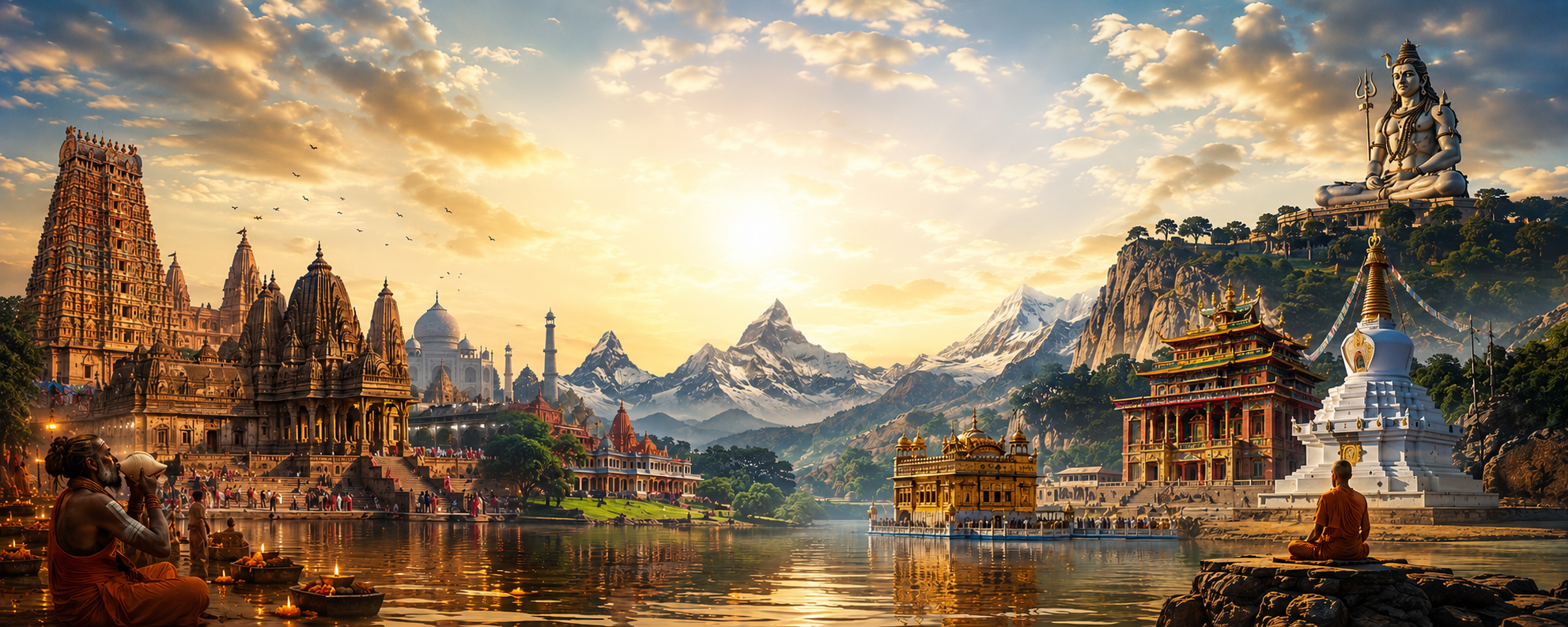
Spiritual travel in India isn't confined to one religion or region. From the ghats of Varanasi to the gurdwaras of Punjab, the virtues of Ajmer, and the Buddhist monasteries of Ladakh, the diversity is genuinely remarkable.
What ties these journeys together is a shared sense of purpose. People aren't just visiting a place; they're participating in something that has continued, largely unchanged, for centuries.
If you're new to this kind of travel, it helps to research the specific customs of your destination beforehand. A shrine in Kerala may have very different dress codes and rituals compared to one in Rajasthan.
05. Planning a Group Pilgrimage Tour in India
Traveling with others, whether it's an organized group or your own family, changes the logistics quite a bit.
Group pilgrimage tour packages India typically include shared transport, fixed itineraries, and group accommodation, which can reduce costs significantly compared to solo travel.
Here's what to keep in mind before joining a group tour:
- Check the group size — smaller groups usually mean more flexibility and attention.
- Ask about the pace of the itinerary, especially for physically demanding routes.
- Confirm meal arrangements, particularly if you have dietary restrictions (e.g. Pure Veg, Jain meals).
- Look into whether the group includes a knowledgeable coordinator or guide familiar with the site's history.
Group travel also brings a sense of community. Sharing meals and long journeys with fellow pilgrims often becomes one of the most memorable parts of the trip.
06. Senior Citizen Pilgrimage Tour in India: Special Considerations
Many pilgrims are elderly, and a well-planned senior citizen pilgrimage tour India can make these journeys accessible and comfortable rather than exhausting.
A few practical points worth discussing with your travel agency:
- Ask about routes with fewer steep climbs or long walking stretches.
- Confirm availability of wheelchair assistance or palki options at major shrines.
- Check if the itinerary includes adequate rest days between destinations to prevent fatigue.
- Ensure accommodations are close to the pilgrimage site to reduce daily travel time.
“Have you traveled with elderly parents before? If so, you already know that pacing and comfort matter far more than covering every possible stop.”
It's also worth carrying a basic medical kit and a list of regular medications, along with copies of any prescriptions, especially for high-altitude pilgrimages like Kedarnath or Amarnath.
07. Family Pilgrimage Travel Guide: Traveling with Children
A family pilgrimage travel guide wouldn't be complete without addressing the unique challenges of traveling with kids. Long queues, early morning rituals, and crowded temple premises can be tiring for children.
Some practical suggestions:
- Choose shorter, less crowded pilgrimage circuits for younger children.
- Carry dry snacks, water, and small games for long waiting periods.
- Explain the significance of the visit in simple stories beforehand; children engage more when they understand the “why”.
- Avoid over-packing the itinerary; one meaningful temple visit is better than five rushed ones.
Families often find that pilgrimage trips, when paced well, become some of the most bonding experiences they share together.
08. What to Carry for a Pilgrimage Trip
Packing right is one of the most practical parts of any religious travel guide. Requirements vary by destination, but here's a general checklist:
Essentials
- ✦ Comfortable, modest clothing
- ✦ Head scarf / Shawl
- ✦ Easy-to-remove slip-on shoes
- ✦ Refillable water bottle
- ✦ Personal medications
For Trekking / Altitudes
- ✦ Layered clothing for cold
- ✦ Quality raincoat / Poncho
- ✦ Sturdy trekking poles
- ✦ Altitude sickness medicines
Documents & Cash
- ✦ Valid ID cards (Aadhaar, etc.)
- ✦ Printed permits & bookings
- ✦ Small denomination cash notes
Keeping your bag light but well-organized makes a noticeable difference, especially on routes involving long walks or queuing.
09. Practical Pilgrimage Travel Tips Before You Go
- 1Check the season. Many Himalayan shrines close during winter months due to heavy snow.
- 2Book accommodation early, particularly during major festivals when local demand spikes.
- 3Respect local customs, including strict photography restrictions inside temple sanctums.
- 4Stay hydrated and rested, especially before high-altitude visits.
- 5Keep emergency contacts handy, including your travel agency's local coordinator.
None of these tips are complicated, but together they prevent most of the common issues first-time pilgrims run into.
Conclusion: Making Your First Pilgrimage Meaningful
Your first pilgrimage doesn't need to be perfectly planned to be meaningful, but a little preparation certainly helps it go smoothly. From choosing between a customized pilgrimage tour India and a group package, to packing the right essentials, every decision shapes how peaceful your journey feels.
India's pilgrimage circuits offer something genuinely rare: a chance to slow down and connect with centuries-old traditions. Whether you're traveling solo, with elderly parents, or as a family, working with an experienced Spiritual Travel Agency India can take the logistical stress off your shoulders, leaving you free to focus on the experience itself.
Frequently Asked Questions
Start by researching the specific customs and dress codes of your destination, book accommodation early during festival seasons, and pack according to the climate and altitude of the site. Working with a Spiritual Travel Agency India can also help you avoid common planning mistakes.
A customized pilgrimage tour India lets you choose your own pace, destinations, and accommodation type, while a fixed group tour follows a set itinerary shared with other travelers. Both have their advantages depending on your comfort level and budget.
Yes. Group pilgrimage tour packages India are often a good option for solo travelers, since they provide company, shared costs, and the safety of traveling with others on unfamiliar routes.
A senior citizen pilgrimage tour India should include adequate rest days, minimal walking on steep routes, and accommodations close to the shrine. Carrying medical documents and regular medications is also essential.
Along with standard essentials, carry layered clothing, a raincoat, comfortable trekking footwear, and any doctor-approved medication for altitude sickness. This list is a core part of any practical religious travel guide for Himalayan pilgrimages.